Early summer is one of my favorite times of the year.
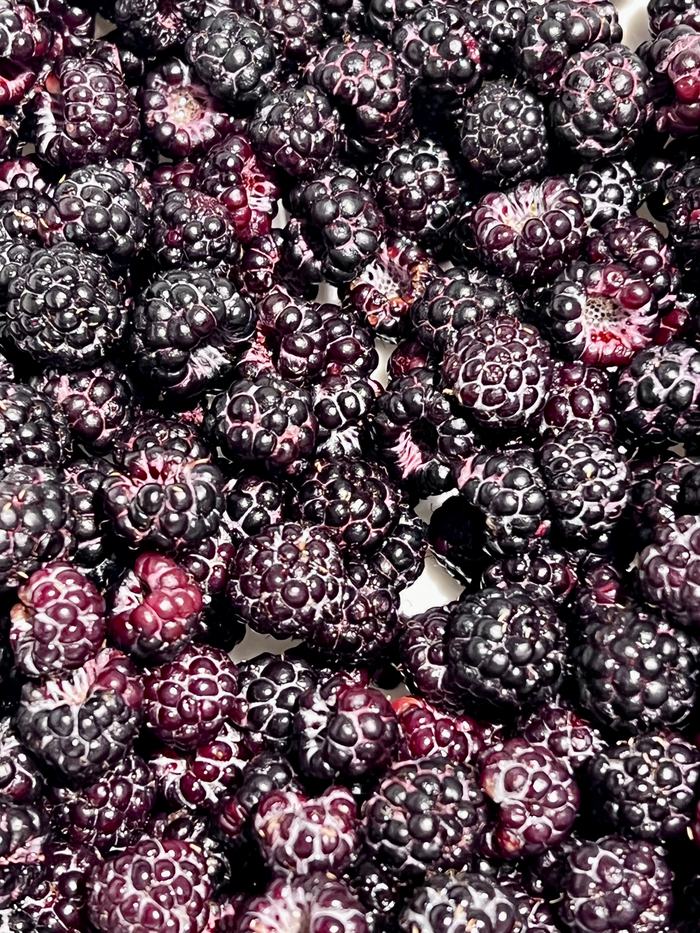
Our house sits on land surrounded by creeks, trails, and a short road that connects our holler to the rest of the county. Now, imagine the areas surrounding our house lined with patches of arching brambles hanging with berries varying in color from green, to red, to purplish-black. These berries are locally known as black raspberries or blackcaps. Scientifically, they are known as Rubus occidentalis.
If you aren't sure if your bramble is a blackberry or a raspberry, simply pull one off. If pulling the berry creates a hollowed out center in the fruit, you have a raspberry. If there's an edible core when pulled off the stem, you have a blackberry.
Blackcaps are a wild, thorny shrub and are not often grown commercially due to their lower fruit yield. The dark pigments in these berries, also known as anthocyanins, make them rich in antioxidants. Regularly adding foods rich in antioxidants to a diet has many health benefits. Reducing inflammation, reducing type 2 diabetes, and lowering the chances of heart disease are just a few examples of what these little purple berries can do.
Although the blackcap brambles may not produce as many berries as others, if you find a larger patch, you'll be able to pick enough to experiment with in the kitchen.
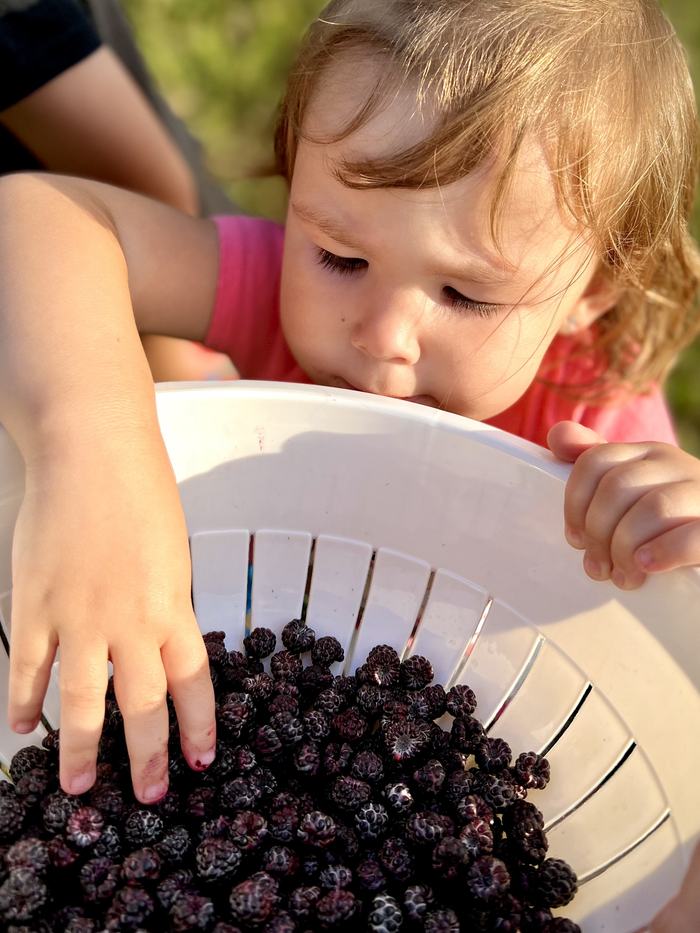
Blackcaps can be used in almost any recipe calling for red raspberries. The berries are seedier than other varieties, so keep that in mind when cooking with them. If you are patient, you can mash and strain the fruit enough to eliminate the bulk of the seeds. My favorite way to eat them is in jelly form on a warm, flaky biscuit. My neighbor prefers them scattered around on a bowl of ice cream. My girls enjoy them straight out of the bucket on the walk back to the house.
Now that you know what to look for and what to do with them, grab a bucket, a long-sleeved shirt, your best bug spray, your family, and go foraging for these yummy berries. If you find a recipe that you love or a new creative way to use the berries, let us know!
NC State University's Extension Gardener Handbook contains much more information on the bramble family, and you can quickly go to Google for all sorts of recipes utilizing the berries. Follow us on Facebook or Instagram for more helpful information!