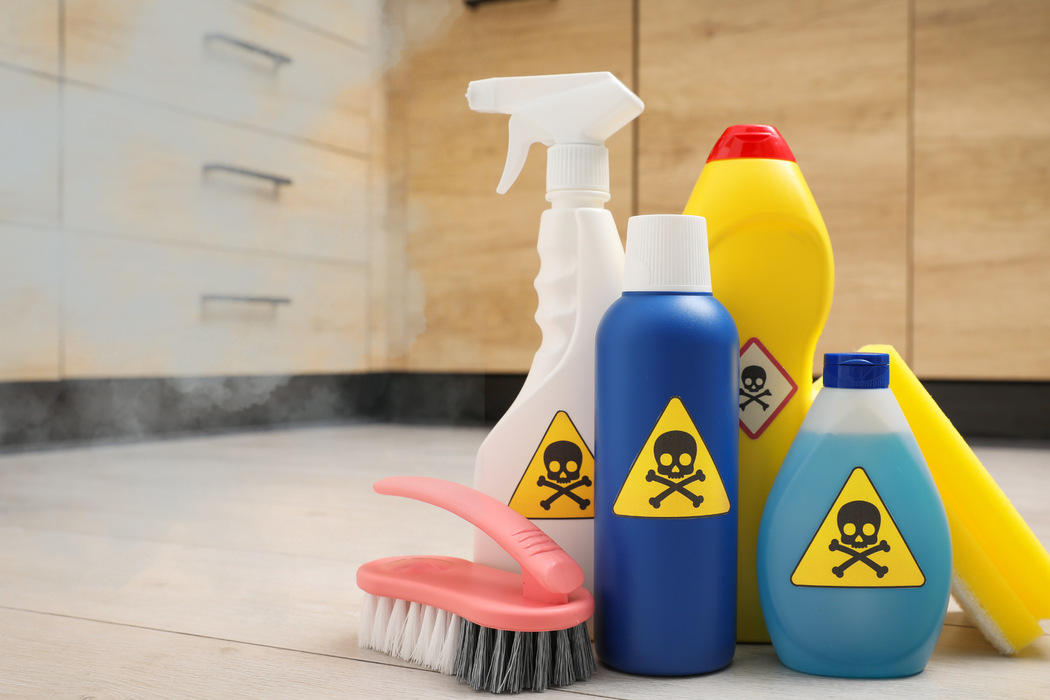
Cleaning up after Hurricane Helene offers a chance to restore homes and communities but also brings unique challenges when dealing with water damage, mold, and debris. While many household cleaners can help tackle these messes, it’s important to understand how to use them safely to avoid accidental harm. Everyday products like bleach, vinegar, and ammonia are powerful tools for disinfecting and removing stains, yet they can be hazardous if mixed improperly. Knowing the right ways to use these products makes cleanup more effective and helps protect health and safety during the recovery process.
Mixing some cleaners can make dangerous gases that harm your body. These gasses are clear and won't produce any odor beyond what you smell from the household cleaners, which is what makes them so dangerous. NEVER mix these chemicals together: bleach + ammonia, bleach + vinegar, vinegar + hydrogen peroxide, and bleach + rubbing alcohol. Here’s what can happen when these chemicals mix and toxic gases are accidentally made:- Breathing Problems: These gases can make it hard to breathe and cause coughing, chest tightness, and a burning feeling in your throat. In serious cases, it can damage your lungs.
- Burning Eyes and Skin: The gases can irritate your eyes, making them red, watery, or even painful. They can also cause a burning feeling or rash on your skin.
- Dizziness and Feeling Sick: Breathing in these gases may make you feel dizzy, lightheaded, or even sick to your stomach. If you breathe in a lot, you could even faint.
- Serious Damage Inside the Body: If someone breathes in a large amount of these gases, it can cause more serious damage inside the lungs and throat, and it can be hard to recover from this.
- Long-Term Health Issues: Over time, breathing in these types of gases—even a little bit—could lead to serious health issues like asthma, other breathing problems, and damage to the lungs or other organs.
How to Stay Safe While Using Cleaners
- Good Airflow: Always use cleaners with windows open or in a room with a fan to help move the air around.
- Protect Yourself: Wear gloves to protect your skin, and goggles if you’re using a strong cleaner.
- Read Labels: Carefully read the instructions on cleaning products and don’t mix cleaners unless the label says it’s safe.